
What Are Forever Chemicals (PFAS)?
“Forever chemicals” is the common name for a group of synthetic chemicals called PFAS (per- and polyfluoroalkyl substances). These chemicals are widely used in consumer and industrial products because they resist water, grease, heat, and stains.
PFAS are called “forever chemicals” because they:
- Do not easily break down in the environment
- Can remain in water, soil, and dust for decades
- Can accumulate in the human body over time
According to the U.S. Environmental Protection Agency (EPA) PFAS information, exposure to certain PFAS may be associated with health effects including immune, hormonal, and metabolic changes.
Common Sources of Forever Chemicals in Everyday Life
Many people are surprised by how often PFAS and similar endocrine-disrupting chemicals appear in daily life.
Food Packaging and Fast Food Containers
PFAS can be found in:
- fast food wrappers
- microwave popcorn bags
- pizza boxes
- grease-resistant bakery paper
Drinking Water
Contaminated water is considered one of the most significant exposure pathways in the United States.
Plastic Containers and Food Storage
Exposure may come from:
- plastic food containers (especially when heated)
- plastic wrap
- bottled water
- canned food linings (BPA exposure often discussed alongside PFAS concerns)
Nonstick Cookware
Traditional nonstick cookware (especially when damaged or overheated) has been a historical source of fluorinated compounds.
Stain-Resistant and Waterproof Products
These include:
- carpets and rugs
- upholstered furniture
- waterproof jackets
- outdoor gear
Personal Care and Beauty Products
Some cosmetic products may contain or be associated with fluorinated compounds or endocrine-disrupting ingredients:
- waterproof mascara
- long-lasting foundation
- fragranced lotions
- perfumes
Household Products and Indoor Air
Other exposure sources include:
- synthetic cleaning products
- air fresheners
- household dust
- treated textiles and furniture
Forever Chemicals and Hormone Imbalance (Endocrine Disruption)
One of the most discussed areas of research is how environmental chemicals may affect hormones.
Certain PFAS, along with BPA and phthalates, are studied as endocrine-disrupting chemicals (EDCs). These substances may interfere with the body’s natural hormone signaling.
According to the National Institute of Environmental Health Sciences (NIEHS) endocrine disruptor research, endocrine disruptors may:
- mimic natural hormones like estrogen
- block hormone receptors
- alter hormone production and metabolism
Possible Hormonal Effects Being Studied:
- estrogen balance changes
- thyroid disruption
- reproductive hormone imbalance
- metabolic changes
This is why the topic of “estrogen dominance” is often discussed in wellness communities, even though it is not a formal medical diagnosis in conventional medicine.
Thermography and Hormonal Health Awareness
Breast thermography is a non-invasive imaging method that uses infrared technology to detect heat and vascular patterns in breast tissue.
In my personal experience, I went for a thermography breast exam as part of my natural health routine. The consultation included discussion about hormonal patterns and possible estrogen-related imbalance, as well as environmental influences.
It is important to clarify:
- thermography is not recommended as a replacement for mammography in medical screening
- it does not diagnose hormone conditions
- interpretations may vary depending on the practitioner
However, the experience encouraged me to explore the connection between environmental chemicals and hormonal health more deeply.
Is There a Link Between Forever Chemicals and Estrogen Dominance?
Scientific research is ongoing, but there is increasing evidence that some environmental chemicals may interact with hormone systems.
Studies suggest PFAS and other endocrine disruptors may:
- influence estrogen activity
- affect hormone metabolism
- contribute to long-term endocrine imbalance
However, research is still developing, and no single test (including thermography) can confirm a direct cause such as “PFAS-induced estrogen dominance.”
The most accurate way to describe it is:
There is a possible association between long-term exposure to endocrine-disrupting chemicals and hormone imbalance, but more research is needed to fully understand the relationship.
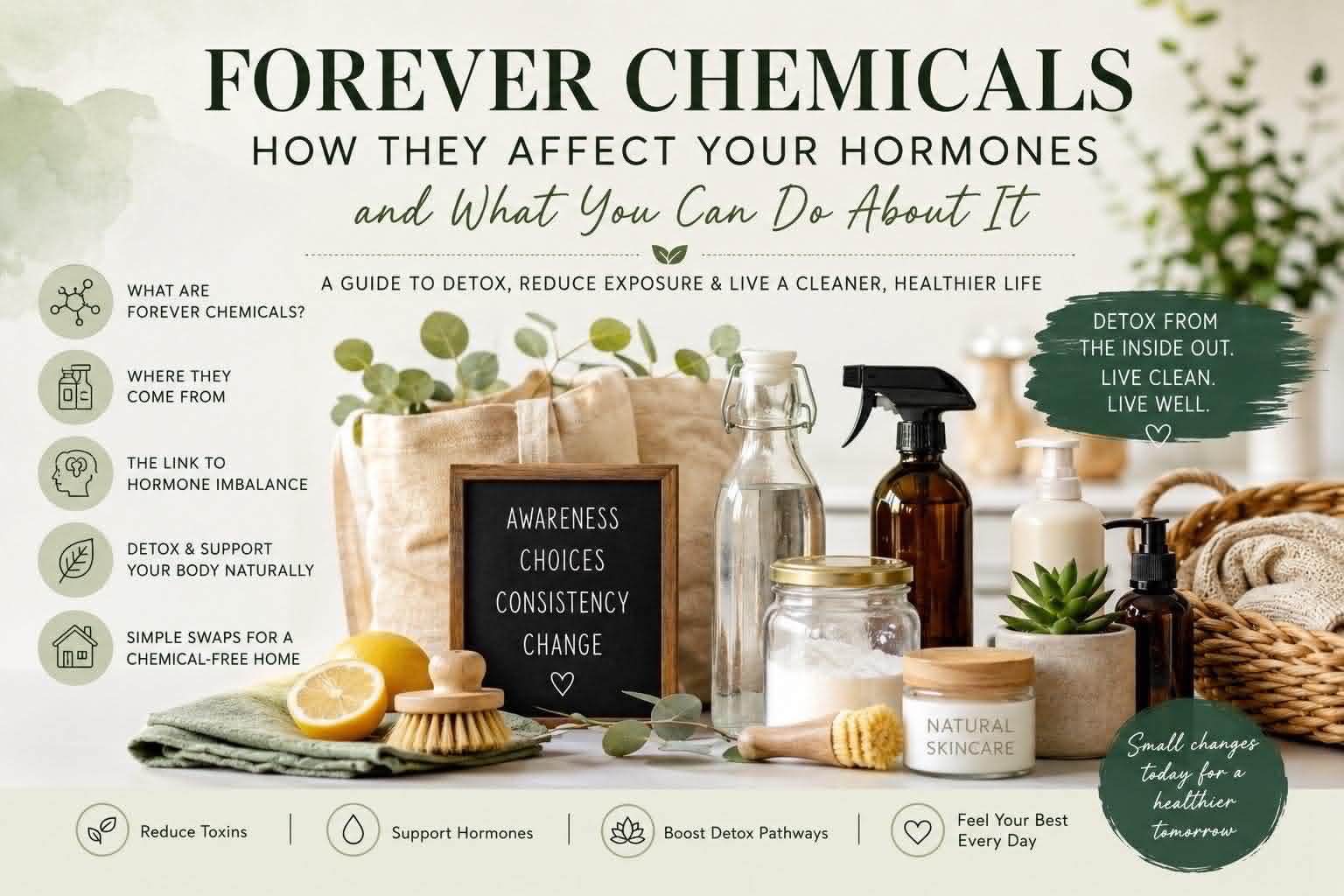
Clean 9 Detox Program and Lifestyle Reset
I also want to include my perspective on Forever Living Clean 9 (C9), which is often used as a short-term detox and lifestyle reset program.
Clean 9 typically focuses on:
- reducing processed food intake
- improving hydration
- supporting digestion
- encouraging healthier daily habits
From my experience, programs like Clean 9 can be helpful as a structured reset for nutrition and habits, especially when starting a healthier lifestyle.
However, it is important to understand:
👉 Clean 9 is not a medical detox for removing forever chemicals (PFAS)
👉 There is no clinical evidence that short-term cleanses remove environmental toxins from the body
Instead, long-term support of detoxification relies on:
- liver and kidney function
- consistent nutrition
- hydration
- reducing ongoing chemical exposure
How to Reduce Exposure to Forever Chemicals (Practical Steps)
If you want to reduce chemical exposure in your daily life, here are evidence-based strategies:
Kitchen and Food Safety
- Use glass or stainless steel containers
- Avoid heating food in plastic
- Replace old nonstick cookware
- Choose fresh, whole foods when possible
Water Filtration
- Consider reverse osmosis or certified carbon filters
- Check local water quality reports
Personal Care Products
- Reduce synthetic fragrances
- Choose simpler ingredient lists
- Avoid unnecessary chemical additives
Home Environment
- Improve ventilation
- Vacuum with HEPA filters
- Reduce air fresheners and scented sprays and candles
Supporting the Body’s Natural Detox Systems
The human body already has built-in detoxification systems:
- liver
- kidneys
- digestive system
- lymphatic system
- skin
Final Thoughts: Awareness, Not Fear
The conversation around forever chemicals, hormone balance, and detox lifestyle is growing because people are becoming more aware of environmental health.
My personal takeaway is simple:
We cannot avoid every chemical in modern life, but we can make informed choices that reduce unnecessary exposure.
Small daily decisions in food, water, skincare, and home environment can make a meaningful difference over time.
References and Sources
- U.S. Environmental Protection Agency (EPA) – PFAS Overview
General information about PFAS (“forever chemicals”), environmental exposure, and health concerns. - EPA – Our Current Understanding of the Human Health and Environmental Risks of PFAS
Discusses how PFAS accumulate in the environment and human body over time. - National Institute of Environmental Health Sciences (NIEHS) – Endocrine Disruptors
Explains endocrine-disrupting chemicals (EDCs), including how certain chemicals may interfere with hormone systems. - NIEHS – Endocrine Disruptor Research Program
Covers BPA, phthalates, PFAS, and other chemicals studied for hormone disruption. - U.S. Food and Drug Administration (FDA) – Thermography Is Not a Substitute for Mammography
FDA guidance stating thermography should not replace mammograms for breast cancer screening. - Verywell Health – What Is Breast Thermography?
Overview of breast thermography, including benefits, limitations, and FDA position. - Reuters – EPA PFAS Reporting and Transparency Requirements
Discusses PFAS regulation and reporting requirements in the United States. - The Guardian – Scientists and Researchers Raise Concerns About PFAS Exposure
Discusses PFAS contamination concerns in pesticides and environmental exposure.
Disclaimer: This article is for educational and informational purposes only and is not intended as medical advice or diagnosis. Always consult a qualified healthcare professional regarding personal health concerns and screening decisions.


Discover more from Gut Health Matters
Subscribe to get the latest posts sent to your email.