
If you’ve been paying attention to the wellness world lately, you might have noticed something interesting: aloe vera gel, once a niche product associated mainly with sunburn relief, is having a global moment, and this time, it’s about gut health.
Recent market research confirms what many health enthusiasts already feel in their bones (and bellies): aloe vera gel demand is growing fast. According to Allied Market Research, the global aloe vera gel market was valued at USD 309.7 million in 2023 and is projected to nearly double to USD 603.5 million by 2033, with an annual growth rate of almost 7%. Other reputable sources, like IMARC Group and Future Market Insights, place the current market between USD 303 million and USD 346 million, all pointing to the same trend: steady, sustained growth.
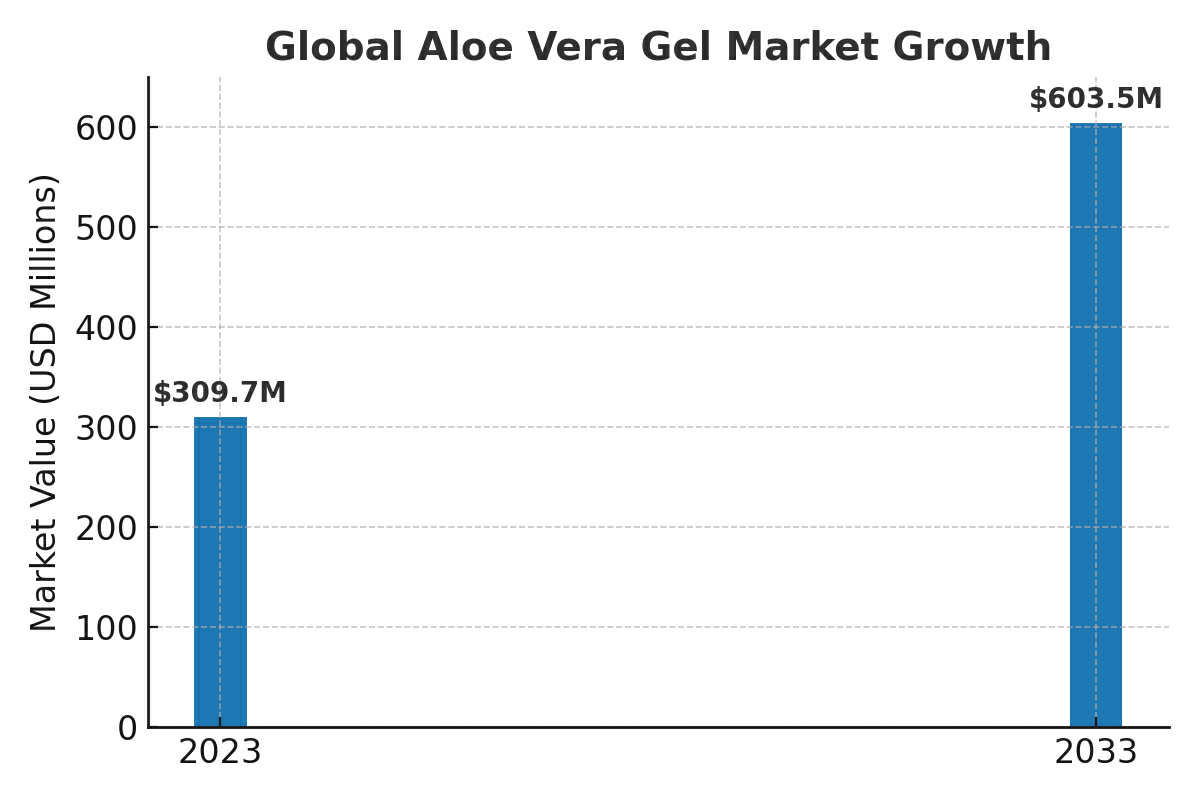
From Niche to Mainstream
A decade ago, only a handful of brands – most notably Forever Living Products – dominated the aloe vera gel scene. If you drank aloe for digestion, you were part of a small, wellness-forward crowd. Fast forward to today, and supermarket shelves and online stores are filled with new aloe brands, each promising purity, potency, and gut-healing benefits. The surge of competitors isn’t a sign of oversaturation – it’s proof that consumer demand is fueling innovation.
Why Gut Health is Driving Aloe’s Popularity
Gut health is no longer a fringe topic; it’s a mainstream wellness goal. We now know that a healthy digestive system plays a vital role in immunity, mood regulation, nutrient absorption, and even skin health. Aloe vera gel – made from the inner leaf fillet of the aloe plant – has earned its spot in the gut health toolkit for several reasons:
- Soothing the Digestive Tract: Aloe vera’s natural compounds can calm occasional stomach discomfort and promote a more comfortable digestion experience.
- Supporting a Healthy Microbiome: Some studies suggest aloe vera gel may help balance gut bacteria, creating a friendlier environment for good microbes.
- Aiding Regularity: Aloe’s natural properties can gently support bowel regularity without harsh laxatives.
- Anti-inflammatory Effects: Aloe contains compounds like acemannan that may reduce gut inflammation, supporting long-term digestive wellness.
The Bigger Picture: A Global Shift Toward Natural Solutions
As consumers become more educated about the gut-body connection, they’re seeking remedies that work with the body, not against it. Aloe vera gel fits perfectly into this movement: plant-based, nutrient-rich, and time-tested in traditional medicine.
The growing market isn’t just about dollars – it’s about trust. More people are believing in aloe vera’s ability to support their digestive systems, and they’re willing to invest in quality products to do so.
Choosing the Right Aloe Vera Gel
Not all aloe gels are created equal. If you’re exploring this option for gut health, look for products that:
• Are made from inner leaf fillet only (not whole leaf, which can contain irritants).
• Are certified for purity by reputable organizations.
• Have minimal added sugars or unnecessary ingredients.
Bottom Line
The aloe vera gel market is growing because people are hungry – literally and figuratively – for better gut health solutions. With global sales climbing and more brands entering the space, it’s a sign that natural, plant-based remedies are no longer an alternative – they’re becoming the standard.
And as the data shows, this trend is just getting started.
References
1. Allied Market Research. Aloe Vera Gel Market by Type, Application, and Distribution Channel: Global Opportunity Analysis and Industry Forecast, 2024–2033. Published April 2024.
2. IMARC Group. Aloe Vera Gel Market: Global Industry Trends, Share, Size, Growth, Opportunity and Forecast 2024–2033. Published March 2024.
3. Future Market Insights. Aloe Vera Gel Market Outlook (2024 to 2034). Published May 2024.
Discover more from Gut Health Matters
Subscribe to get the latest posts sent to your email.

 Gut Health Matters